shravan maas 2026 start and end date
The holy month of Shravan (also known as Sawan) holds a revered place in the Hindu calendar. Dedicated entirely to Lord Shiva, this sacred month brings a wave of devotion, fasting (vrat), and spiritual cleansing across the globe.
Whether you are observing Sawan Somwar Vrat for the first time or seeking a step-by-step Jalabhishek Vidhi, this complete guide covers the 2026 calendar dates, rituals, mantras, and the deep significance of worshipping Bholenath.
Important Dates for Shravan 2026
Due to regional differences in lunar calendars—Purnimanta in North India and Amavasyant in South and West India—Shravan dates vary slightly by region.
North India (Purnimanta Calendar): July 30, 2026 – August 28, 2026
South & West India (Amanta Calendar): August 13, 2026 – September 11, 2026
Note: For North Indian states (UP, MP, Bihar, Rajasthan, Punjab, Delhi), Shravan 2026 begins on July 30, 2026 and concludes on August 28, 2026 (Shravan Purnima / Raksha Bandhan).
Sawan Somwar Vrat 2026 Calendar (Mondays)
Every Monday in Shravan is known as Sawan Somwar and is considered extraordinarily auspicious for offering prayers and keeping fasts.shravan maas 2026 start and end date
| Shravan Somwar | North India Dates | South & West India Dates |
| 1st Somwar | August 3, 2026 | August 17, 2026 |
| 2nd Somwar | August 10, 2026 | August 24, 2026 |
| 3rd Somwar | August 17, 2026 | August 31, 2026 |
| 4th Somwar | August 24, 2026 | September 7, 2026 |
Why is Shiva Worship Special in Shravan?
The core significance of worshipping Lord Shiva during Shravan traces back to the celestial ocean churning legend, Samudra Manthan.
When the ocean was churned by the Devas and Asuras, a deadly poison called Halahala emerged, capable of destroying the universe. To save creation, Lord Shiva drank the lethal poison and held it in his throat, which turned blue—earning him the name Neelkanth.
To cool the intense heat caused by the poison, the Devas offered holy water from the Ganges to Mahadev. Performing Jalabhishek during Shravan is a symbolic recreation of this act of gratitude, cooling Lord Shiva’s divine energy and receiving his supreme grace in return.
The Spiritual Importance of Jalabhishek
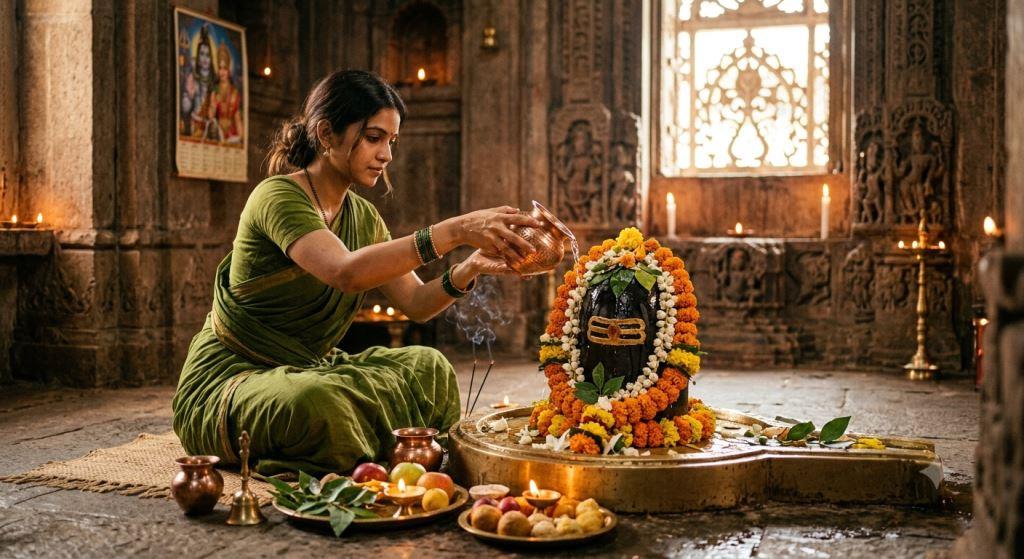
Offering water (Jalabhishek) or milk (Doodhabhishek) over the Shivling is the most central ritual of Sawan.
Mind and Body Purification: Water represents flow, purity, and tranquility. Offering water calms restless thoughts.
Destruction of Negative Karma: According to scriptures, sincere Jalabhishek done during Shravan dissolves past sins and brings spiritual peace.
Fulfillment of Desires: Devotees pray for marital harmony, health, prosperity, and liberation (Moksha).
Best Time (Shubh Muhurat) for Jalabhishek
Brahma Muhurta: 4:00 AM – 5:00 AM (Ideal for intense meditation)
Morning Hours: Sunrise to 11:00 AM
Pradosh Kaal: Around sunset (6:30 PM – 7:30 PM)
Sawan Somwar Vrat: Fasting Rules & Types
Keeping a fast on Mondays during Shravan helps build self-discipline and mental clarity.
Types of Fasts
Partial Fast (Phalahar): Consuming fruits, milk, sabudana, makhana, and rock salt (sendha namak) once during the day.
Full Fast (Nirjala): Observing a complete fast without food or water until sunset or the following morning.
What to Avoid During Sawan
Dietary: Onion, garlic, non-vegetarian food, alcohol, and refined salt.
Puja Items to Exclude: Never offer Tulsi leaves, Turmeric (Haldi), Ketaki flowers, or Kumkum to a Shivling. Use Belpatra, Bhaang, Dhatura, and Chandan instead.
Step-by-Step Shiva Puja Vidhi at Home
You do not need an elaborate setup to perform Sawan Shiva Puja. Devotion and sincerity matter most.
Morning Prep: Wake up during Brahma Muhurta, bathe, and wear clean, light-colored clothes.
Cleanse the Altar: Clean your home temple and place the Shivling facing North or East.
Perform Abhishekam:
Pour pure water over the Shivling while chanting Om Namah Shivaya.
Pour raw cow milk, followed by gangajal or water to clean.
Offer Sacred Ingredients:
Belpatra: Offer 3-leaf Belpatra with the smooth side touching the Shivling.
Sandalwood (Chandan): Apply white sandalwood paste.
Dhatura & Bhaang: Offer Dhatura fruit/flowers and Bhaang leaves.
Chant Mantras: Recite Mahamrityunjaya Mantra or Om Namah Shivaya 108 times.
Aarti & Bhog: Light a ghee lamp (diya), perform Aarti, and offer fruits or kheer as Bhog.
Powerful Mantras to Chant in Shravan
1. Panchakshari Shiva Mantra
“ॐ नमः शिवाय”
(Om Namah Shivaya)
2. Mahamrityunjaya Mantra (For Health & Protection)
“ॐ त्र्यम्बकं यजामहे सुगन्धिं पुष्टिवर्धनम्।
उर्वारुकमिव बन्धनान्मृत्योर्मुक्षीय माऽमृतात्॥”
Frequently Asked Questions (FAQs)
Q1. When does Shravan 2026 start and end?
In North India, Shravan 2026 begins on July 30, 2026 and ends on August 28, 2026. In South and Western states, it runs from August 13, 2026 to September 11, 2026.
Q2. How many Sawan Somwars are there in 2026?
There are 4 Sawan Somwars (Mondays) in 2026.
Q3. Can unmarried women observe Sawan Somwar Vrat?
Yes. Unmarried women observe Sawan Somwar Vrat to pray for a loving and compatible life partner, drawing inspiration from Goddess Parvati’s devotion to Lord Shiva.