Among the many remedies prescribed in Vedic tradition for pacifying Shani Dev (Lord Saturn), Tula Daan is considered one of the most powerful and complete forms of charity. Unlike a single offering, Tula Daan involves balancing a person’s own body weight against grains, food, cloth, or other sacred items on a traditional scale (tula) — and then donating that exact quantity to the needy. This article explains what Tula Daan is, why it is linked to Shani Shanti (peace from Saturn’s afflictions), and how it is traditionally performed.
What is Tula Daan?
The word Tula means “balance” or “weighing scale,” and Daan means “donation” or “charity.” In this ritual, a person sits on one side of a large scale while items of equal weight — such as grains, salt, jaggery, iron, sesame, or clothing — are placed on the other side until the two sides balance. All of this weighed material is then donated to temples, the poor, or charitable institutions. The practice is believed to have been initiated by the sage Narada and is described in several Puranic texts as a Mahadan (great charity), because the donor gives an amount proportional to their own body — a deeply personal form of sacrifice.
Why Tula Daan is Linked to Shani Shanti
In Vedic astrology, Shani (Saturn) governs karma, discipline, justice, and the consequences of one’s actions. When a person is going through Shani Sade Sati, Shani Dhaiya, or an unfavorable Shani Mahadasha, they often experience delays, obstacles, health concerns, or professional setbacks. Charity — especially charity performed with full devotion and personal sacrifice — is considered one of the most effective ways to soften these effects. Because Tula Daan involves giving an amount equal to one’s own weight, it is seen as a particularly sincere and complete offering, making it a preferred remedy specifically for Shani-related doshas.
Best Time to Perform Tula Daan for Shani
While Tula Daan can be performed on any auspicious occasion, certain days and periods are considered especially powerful for Shani-related donations:
- Saturdays (Shanivar): The day ruled by Shani Dev, ideal for any Saturn remedy.
- Shani Amavasya: When the new moon falls on a Saturday, considered one of the most potent days for Shani charity.
- Shani Jayanti: The birth anniversary of Shani Dev, widely observed with mass donation drives.
- During Sade Sati or Shani Mahadasha: Many astrologers recommend Tula Daan at the start of these periods to ease their impact.
Items Traditionally Used in Shani Tula Daan
Since Shani is associated with the color black and with iron, the items donated in his name typically reflect these qualities:
| Category | Items |
|---|---|
| Grains & Food | Black sesame seeds (kala til), urad dal, black gram, mustard oil |
| Metal | Iron items, iron vessels |
| Cloth | Black clothing, black blankets |
| Other | Sesame oil for lamps, footwear (for the needy), jaggery |
A full Tula Daan uses a combination of these items in quantities matching the devotee’s body weight, though many families perform a simpler, symbolic version using a smaller fixed quantity when a full ceremonial weighing is not practical.
Step-by-Step Tula Daan Vidhi
- Take a bath early in the morning and wear clean, preferably dark-colored clothes.
- Offer prayers to Shani Dev, lighting a mustard oil lamp before the ritual begins.
- Sit on one pan of the weighing scale while a priest or family member places the donation items on the opposite pan.
- Once the scale balances, recite Shani mantras such as “Om Sham Shanicharaya Namah” while making the offering.
- Distribute the weighed items to the needy, a temple, or a charitable organization — not kept for oneself.
- Conclude with a prayer of gratitude and, where possible, feed the poor as an additional act of seva.
Benefits of Tula Daan for Shani Shanti
- Believed to reduce the intensity of Sade Sati and Shani Dhaiya effects
- Brings mental peace, discipline, and clarity during difficult karmic periods
- Strengthens humility and detachment, qualities Shani is said to reward
- Supports real people in need, turning a personal ritual into tangible social good
Can’t Perform a Full Tula Daan? You Can Still Give
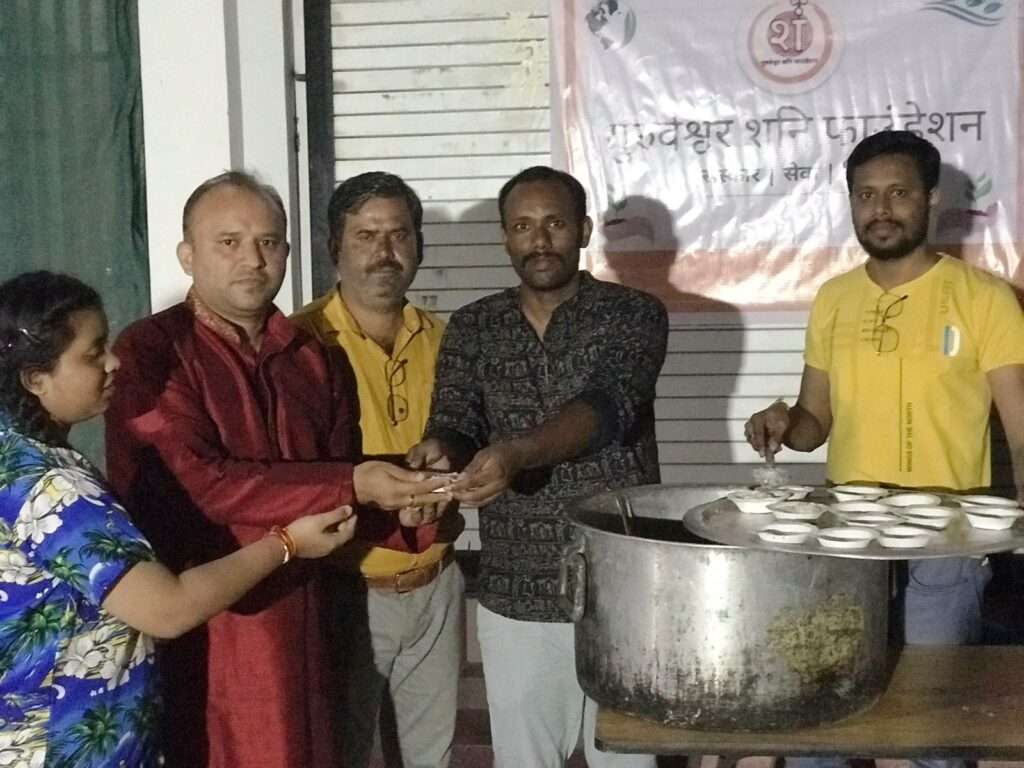
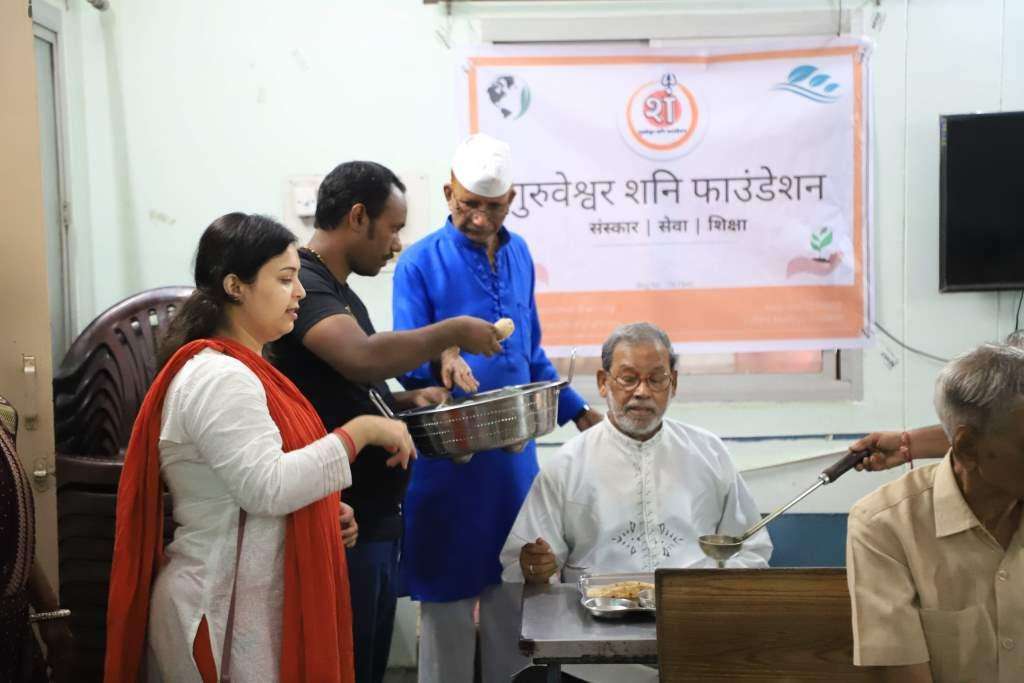
A traditional Tula Daan with a physical scale isn’t accessible to everyone, especially devotees living far from a temple or priest who can conduct the ceremony. The underlying principle — sincere, personal charity in Shani’s name — can still be honored through other established forms of seva. Guruweshvar Shani Foundation offers several ways to participate in Shani-focused charity even without a formal Tula Daan ceremony, including E-Hundi offerings to Shani Dev, regular Annadan (food donation) drives, and dedicated Ekadashi Donation seva. You can read more about the deity himself on our Shani Dev page, or explore all ways to donate to the Foundation.
Frequently Asked Questions
Is Tula Daan only for people affected by Sade Sati?
No. While it’s especially recommended during Sade Sati, Shani Dhaiya, or a difficult Shani Dasha, Tula Daan can be performed by anyone seeking blessings, discipline, and relief from obstacles in life.
Can Tula Daan be done online or without a physical weighing scale?
Yes. Many devotees today make an equivalent monetary or item-based donation in Shani’s name when a formal ceremony isn’t possible — the spirit of sincere, personal giving matters more than the exact ritual form.
What is the ideal day to perform Tula Daan for Shani?
Saturdays, Shani Amavasya, and Shani Jayanti are considered the most auspicious days specifically for Shani-related Tula Daan.
Does Tula Daan guarantee removal of Shani Dosha?
Vedic remedies like Tula Daan are considered supportive practices that bring peace and discipline during difficult periods — they work alongside good conduct and patience, not as a substitute for them.