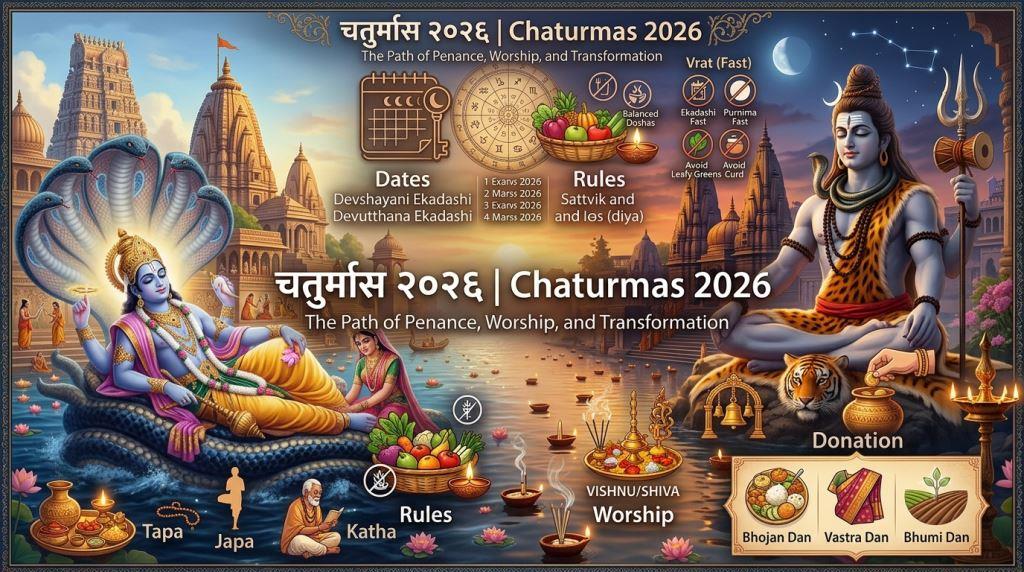
Chaturmas 2026 begins on July 25 (Devshayani Ekadashi) and ends on November 21 (Dev Uthani/Prabodhini Ekadashi). Hindus consider this four-month window one of the holiest phases of the year. Devotees dedicate it to fasting, worship, spiritual discipline and charity. Here is everything you need to know about Chaturmas 2026 — dates, rules, rituals and the benefits of donating during this sacred period.
What Is Chaturmas?
Chaturmas literally means “four months” (Chatur = four, Maas = month). The period runs from Ashadha Shukla Ekadashi to Kartik Shukla Ekadashi. It spans four Hindu lunar months: Shravan, Bhadrapada, Ashwin and Kartik. Tradition holds that Lord Vishnu enters Yoga Nidra, a state of divine cosmic sleep, on Devshayani Ekadashi. He awakens four months later on Dev Uthani Ekadashi. Devotees believe the universe pauses spiritually while Vishnu rests. This makes the period unsuitable for major worldly celebrations. It remains ideal for introspection, penance and devotion.
The period coincides with India’s monsoon season, when travel once grew difficult. Saints and sannyasis would halt their journeys and settle in one place. They used the time to guide local communities through discourses, satsangs and religious teachings. This practice shaped many of the fasting and worship customs devotees still follow today.
Chaturmas 2026: Key Dates
| Event | Date (2026) |
|---|---|
| Chaturmas Begins – Devshayani Ekadashi (Ashadha Shukla Ekadashi) | Saturday, July 25, 2026 |
| Shravan Month | Late July – August |
| Bhadrapada Month (Ganesh Chaturthi falls here) | August – September |
| Ashwin Month (Navratri falls here) | September – October |
| Kartik Month | October – November |
| Chaturmas Ends – Dev Uthani/Prabodhini Ekadashi (Kartik Shukla Ekadashi) | Saturday, November 21, 2026 |
Note: Ekadashi tithi timings can shift slightly by city and Panchang. Confirm exact local timings before you begin or conclude your vows.
Religious Significance of Chaturmas
Chaturmas carries deep spiritual meaning across Vaishnav and broader Hindu traditions:
- Divine rest of Lord Vishnu: The preserver of the universe rests in Yoga Nidra. Devotees see the cosmos as delicate and dormant during this time, which calls for restraint rather than celebration.
- Season of austerity: The rainy season once limited travel and outdoor activity. Sages redirected this downtime toward fasting, scripture study and inner discipline.
- A “no auspicious ceremonies” period: Families traditionally postpone weddings, engagements, Grah Pravesh (housewarming) and Mundan (tonsure) ceremonies until after Dev Uthani Ekadashi.
- Festival-rich months: Despite the pause on personal ceremonies, Chaturmas hosts some of the year’s biggest festivals. Raksha Bandhan, Krishna Janmashtami, Ganesh Chaturthi, Navratri, Dussehra, Karva Chauth and Diwali all fall within this window. Collective devotion continues even as individual milestone events wait.
Rules and Restrictions During Chaturmas
Chaturmas Vrat involves specific dietary, lifestyle and behavioral disciplines. The intensity varies by individual capacity and tradition. Common rules include:
- Month-wise food restrictions: Devotees often give up one specific food item each month. For example, many skip leafy green vegetables in the first month and curd-based foods in the second, as an act of austerity.
- Avoiding auspicious events: Families typically postpone marriages, engagements and housewarmings until Chaturmas ends.
- Simplified living: Many devotees sleep on the floor, skip oiled hair, and give up specific indulgences like outside food, leather items or non-vegetarian food. They also try to reduce unnecessary speech or anger.
- Ekadashi fasting: Devotees consider every Ekadashi that falls within Chaturmas especially powerful for fasting and worship.
- Daily spiritual practice: Many devotees chant mantras, read scripture such as the Bhagavad Gita or Vishnu Sahasranama, and light an evening lamp near the Tulsi plant throughout the period.
Worship Rituals During Chaturmas
- Daily Surya Arghya: Devotees offer water to the rising sun each morning.
- Tulsi Puja: Lighting a ghee lamp near the Tulsi plant every evening carries special significance.
- Vishnu and Shiva Mantras: Many chant “Om Namo Bhagavate Vasudevaya” and “Om Namah Shivaya” daily.
- Satsang and Katha: Devotees listen to or read religious discourses and stories, especially in the evenings.
- Tulsi Vivah: This ritual falls on or around Dev Uthani Ekadashi. It symbolizes the sacred marriage of Lord Vishnu and Tulsi Mata and formally closes Chaturmas.
Benefits of Donation (Daan) During Chaturmas
Charity, or daan, holds special significance during Chaturmas. Hindus believe it multiplies spiritual merit (punya) when performed during this period. Common forms of donation include:
- Annadaan (donating food or grains): devotees consider this one of the most meritorious acts during Chaturmas.
- Vastra daan (donating clothes): especially valuable for the needy ahead of the colder months.
- Gau daan and seva (cow donation or service): closely linked to Vishnu worship.
- Donations to temples and religious institutions: these support scripture study, satsangs and community worship.
- Support for the underprivileged: through education, medicine or basic necessities.
Tradition holds that charitable acts performed during this period bring:
- Purification of mind and removal of past sins
- Enhanced prosperity, peace and family harmony
- Protection from adversities in the year ahead
- Strengthened devotion and a sense of humility and gratitude
Chaturmas 2026: A Time for Reflection
Therefore, Chaturmas asks less for restriction and more for reflection, gratitude and discipline amid a season packed with festivals. Chaturmas 2026 begins on July 25 and closes on November 21 with Dev Uthani Ekadashi and Tulsi Vivah. Across these four months, devotees in India will deepen their spiritual practice, observe fasts and give charity before the wedding season and other auspicious ceremonies resume.
Disclaimer: This article draws on religious beliefs, traditional practices and popular Panchang sources. Exact tithi timings may vary by location. Verify dates with a local Panchang or temple authority before you begin any vrat or ritual.