Pitru Paksha (Shradh) 2026: Tarpan Rituals and Food Donation
Pitru Paksha, also called Shradh Paksha, ranks among the most spiritually significant periods in the Hindu calendar — a 16-day window that families set aside entirely for honouring their ancestors (Pitrs). In 2026, this sacred fortnight starts on Saturday, September 26 and ends with Sarva Pitru Amavasya on Saturday, October 10. Throughout these days, families perform Tarpan, Pind Daan, and Anna Daan (food donation) to express gratitude to their forefathers and seek their blessings for the wellbeing of the family.
Pitru Paksha 2026: Key Dates
Families traditionally perform Shradh on the specific tithi (lunar day) on which an ancestor passed away. However, when the exact tithi is unknown, they instead observe Sarva Pitru Amavasya — the final and most significant day of the fortnight.
| Date (2026) | Day | Shraddha Tithi | Special Observance |
| September 26 | Saturday | Purnima Shradh | For ancestors who passed away on Purnima. |
| September 27 | Sunday | Pratipada Shradh | For ancestors who passed away on Pratipada. |
| September 28 | Monday | Dwitiya Shradh | For ancestors who passed away on Dwitiya. |
| September 29 | Tuesday | Tritiya Shradh | For ancestors who passed away on Tritiya. Maha Bharani is also observed. |
| September 30 | Wednesday | Chaturthi Shradh | For ancestors who passed away on Chaturthi. |
| September 30 | Wednesday | Panchami Shradh | For ancestors who passed away on Panchami. |
| October 1 | Thursday | Shashthi Shradh | For ancestors who passed away on Shashthi. |
| October 2 | Friday | Saptami Shradh | For ancestors who passed away on Saptami. |
| October 3 | Saturday | Ashtami Shradh | For ancestors who passed away on Ashtami. |
| October 4 | Sunday | Navami Shradh | For ancestors who passed away on Navami. |
| October 5 | Monday | Dashami Shradh | For ancestors who passed away on Dashami. |
| October 6 | Tuesday | Ekadashi Shradh | For ancestors who passed away on Ekadashi. |
| October 7 | Wednesday | Dwadashi Shradh | For ancestors who passed away on Dwadashi. Magha Shradh is also observed. |
| October 8 | Thursday | Trayodashi Shradh | For ancestors who passed away on Trayodashi. |
| October 9 | Friday | Chaturdashi Shradh | For ancestors who passed away on Chaturdashi. |
| October 10 | Saturday | Sarva Pitru Amavasya | Final day of Pitru Paksha; especially significant for ancestors whose exact death tithi is unknown. |
Note: tithi timings can shift slightly by city, so confirm your family’s specific Shradh date with a local Panchang or priest.
What Is Tarpan? Meaning and Significance
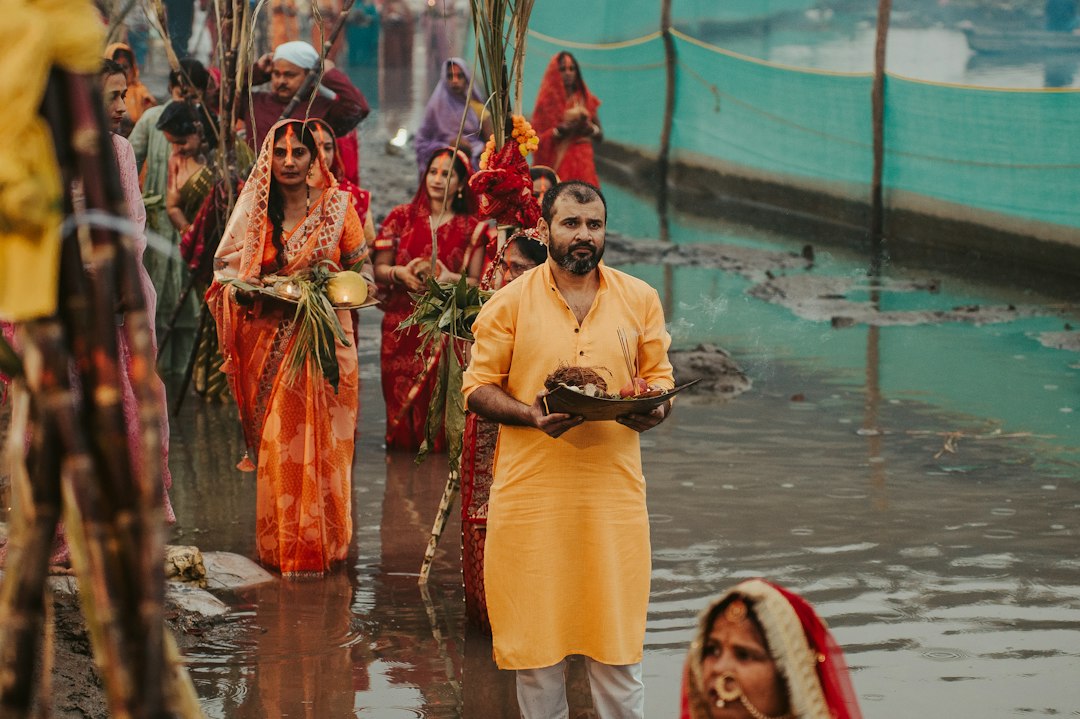
Tarpan is the daily ritual in which devotees offer water mixed with black sesame seeds (til), barley, and kusha grass to their ancestors. According to the Mahabharata, Karna donated only gold during his lifetime and never offered food or water to his forefathers. As a result, when he died, Indra granted him 16 days back on Earth to perform Shradh and Anna Daan. This period is what we now observe as Pitru Paksha. Hindus believe that performing Tarpan repays Pitru Rin, the ancestral debt every individual carries, and in turn brings peace and prosperity to the family.
The Philosophy Behind Pitru Paksha
Hindu scripture holds that every individual carries three debts, or Rin, from birth: Deva Rin (debt to the Gods), Rishi Rin (debt to the sages and teachers), and Pitru Rin (debt to one’s ancestors). Individuals repay Deva Rin through worship and Rishi Rin through the pursuit of knowledge; however, they can only repay Pitru Rin through Shradh, Tarpan, and acts of charity performed in an ancestor’s memory. Pitru Paksha is therefore the dedicated period each year when families formally honour this debt — not out of obligation, but as an expression of gratitude for the life, values, and blessings passed down through generations.
Why Is Shradh Performed?
Scriptures regard Vasu, Rudra, and Aditya as divine representatives of the ancestors during Shradh rituals. Consequently, when a person performs Shradh for their father, grandfather, and great-grandfather, Hindus believe these three divine forms receive the offerings on behalf of all ancestors, known and unknown.
Devotees also believe that during Shradh, ancestors draw close to their descendants and accept the Tarpan and offerings made to them. Satisfied by this remembrance, the ancestors in turn bless the family with happiness, peace, and prosperity.
Notably, reverence for ancestors is not a later addition to Hindu tradition; rather, it traces back to the Rigveda itself, in the 15th Sukta of the 10th Mandala, which honours the ancestors of the past, present, and future alike as worthy of respect across every generation.
Types of Shraddha
Shradh rituals are not one-size-fits-all; instead, they vary by occasion, purpose, and timing. Some of the main types that Hindu tradition observes include:
- Nitya Shradh: Families offer this simple daily water offering (Tarpan) to ancestors, often during morning prayers.
- Naimittik Shradh: Families conduct this on specific occasions, such as an ancestor’s death tithi during Pitru Paksha or at pilgrimage sites.
- Kamya Shradh: Devotees perform this with a specific wish in mind — for progeny, health, or prosperity.
- Vriddhi Shradh: Families conduct this during auspicious events like childbirth or marriage to honour ancestors and seek their blessings.
- Sapindikaran Shradh: Families perform this one-time ritual within a year of death to unite the departed soul with the ancestral spirits.
- Parvana Shradh: This is the most common form; families perform it during Pitru Paksha on the ancestor’s death tithi, involving elaborate rituals and offerings.
- Gosht Shradh: Families perform this for a group of ancestors together, typically on Sarva Pitru Amavasya.
- Shuddhi Shradh: Families perform this for purification, or to correct errors made in a previous Shradh.
- Karma Shradh: This links to specific Vedic rituals or yagnas, offering to ancestors alongside deities.
- Yatra Shradh: Devotees perform this during pilgrimages to holy sites like Gaya for enhanced spiritual merit.
- Ekoddishta Shradh: Families dedicate this to a single ancestor, typically within the first year after their passing.
- Adya Shradh: This is the very first Shradh a family performs after a person’s death, usually on the 11th or 13th day.
Ultimately, each type serves a distinct purpose, ensuring families honour ancestors in the manner appropriate to the occasion and their spiritual needs.
Tarpan Vidhi: A Simple Step-by-Step Guide
- Purify yourself: First, bathe and wear clean clothes before beginning, ideally at sunrise.
- Face south: Next, sit facing the south direction, traditionally associated with the ancestors.
- Prepare the offering: Then, mix water with black til (sesame seeds) in a copper vessel.
- Offer the water: Pour the mixture using both hands, letting it flow through your fingers while chanting the names and gotra of your ancestors.
- Complete with Anna Daan: Finally, conclude the ritual by donating food — to Brahmins, the needy, or animals — in the name of your ancestors.
The Importance of Anna Daan (Food Donation) During Pitru Paksha
Among all the acts of Shradh, Hindus consider Anna Daan — the donation of food — one of the most powerful ways to honour one’s ancestors. Scriptures describe food given with devotion during this period as reaching the Pitrs directly, nourishing their souls and securing their blessings for the family’s prosperity. Additionally, many households observe Kagwal, the practice of feeding crows, cows, and dogs, since Hindus believe these creatures carry offerings to the ancestral realm.
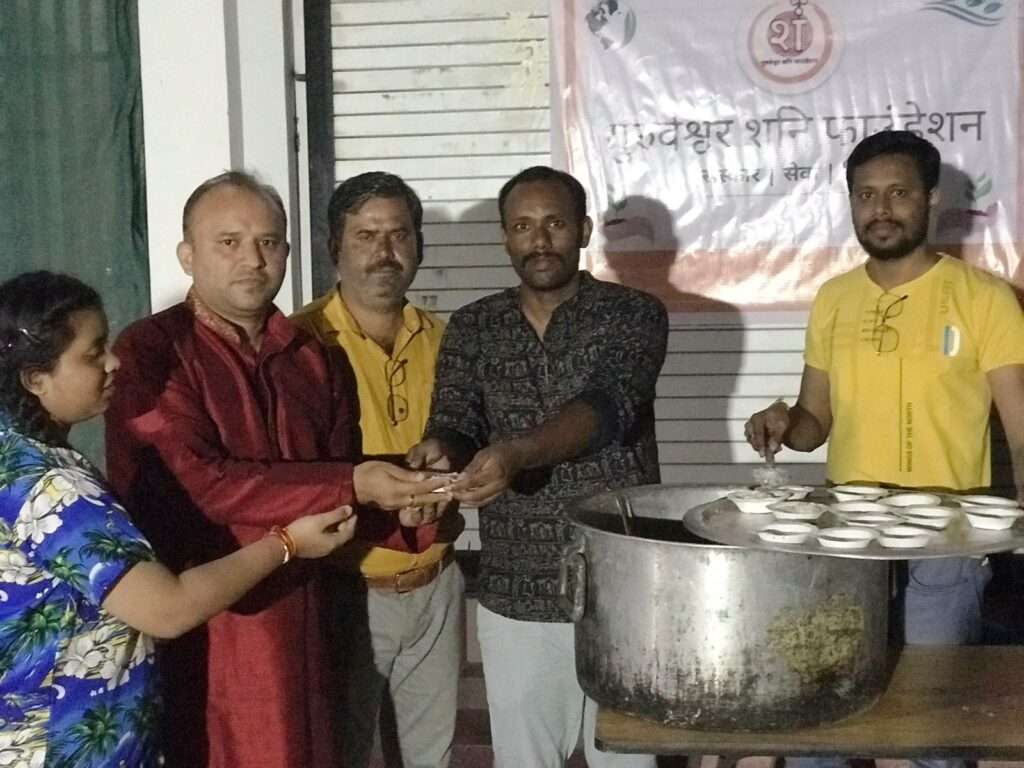
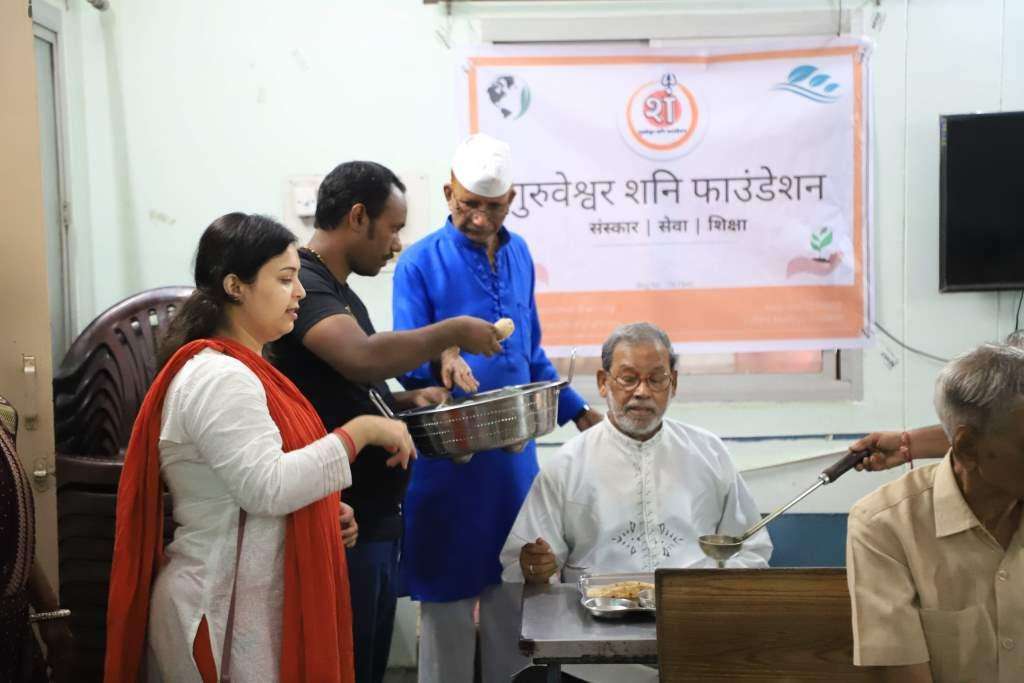
At Guruweshvar Shani Foundation, our Annadan food donation drives run throughout the year, and Pitru Paksha is one of the most meaningful times to contribute — after all, every meal you sponsor in your ancestors’ name becomes an act of Shradh in itself.
Other Acts of Seva During Pitru Paksha
- Vastra Daan: Donate clothes to the poor in memory of departed family members.
- Gau Seva: Feed and care for cows, which Hindus consider sacred carriers of blessings to the Pitrs. Support our ongoing Gau Seva initiative this Pitru Paksha.
- Supporting elders: Caring for elderly and abandoned individuals also counts as an extension of honouring one’s own ancestors — explore our elder and disability support seva.
- Avoiding new beginnings: Families traditionally postpone weddings, griha pravesh, and other auspicious ceremonies until after Pitru Paksha ends.
Why Donate Through Guruweshvar Shani Foundation This Pitru Paksha?
| Seva Option | How It Honours Your Ancestors |
| Annadan (Food Donation) | Sponsor meals for the needy in your ancestors’ name during the 16-day period. |
| Gau Seva | Feed and care for cows, traditionally linked to Pitru blessings. |
| Temple Construction Seva | Contribute to sacred spaces that carry forward your family’s spiritual legacy. |
Contributions support the Foundation’s charitable and seva activities, and an official digital donation receipt is provided for your records. Visit our donation page to give in your ancestors’ honour this Pitru Paksha.
Frequently Asked Questions
1. What is the correct time of day to perform Tarpan?
Devotees generally perform Tarpan during the Aparahna Kaal, roughly between 1:00 PM and 3:30 PM, though many families also do a simpler version at sunrise.
2. What if I don’t know my ancestor’s exact date of death (tithi)?
In that case, you can perform Shradh for all ancestors on Sarva Pitru Amavasya, the final day of Pitru Paksha — October 10, 2026 — regardless of the specific tithi.
3. Can food donation replace formal Shradh rituals?
Hindus consider Anna Daan a core part of Shradh itself, not a replacement. Still, for those who cannot perform elaborate rituals, sincere food donation in an ancestor’s name counts as a deeply meaningful act of remembrance.
4. Are new ventures or celebrations allowed during Pitru Paksha?
Generally, families avoid auspicious events like weddings, griha pravesh, and purchasing new items during this period, though routine daily worship can continue as usual.